Interview
2025-06-27
MegazoneCloud nurturing quantum startups... leading domestic ecosystem development
MegazoneCloud is accelerating cooperation with promising startups to lay the foundation for growth in the domestic quantum computing industry.
Rather than simply exhibiting technology or selling solutions, the company's policy is to commercialize startups' technologies together, introduce them to the market, and lead the expansion of the quantum ecosystem.
MegazoneCloud participated in the 'Quantum Korea 2025' event held at AT Center in Yangjae-dong, Seoul from the 24th to 26th, and unveiled major projects combining quantum computing and AI infrastructure. At this exhibition, the company operated a joint booth with Qubistack, a quantum startup spun off from Seoul National University's research lab, attracting visitors' attention.
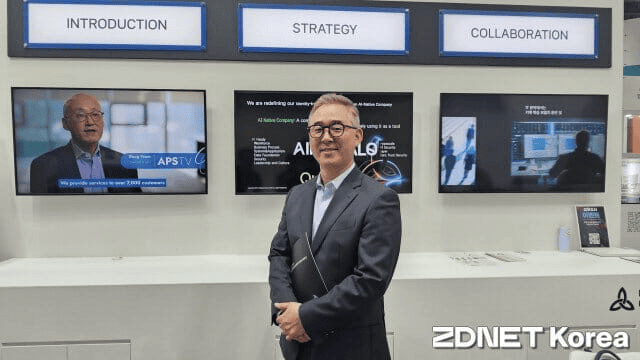
Although Qubistack is a startup in its early stages, the quantum emulator technology it developed is already attracting attention in various fields. This technology is designed to simulate the operation of quantum circuits in existing computer environments without an actual quantum computer, and is particularly praised for overcoming the memory limitations of existing simulators by expanding the number of qubits by connecting multiple storage units in parallel.
At this event, Qubistack showcased its technology implemented in a water-cooled hardware server as a physical equipment form. Visitors were able to directly witness complex quantum operations being implemented in practice, and MegazoneCloud announced that it is working on productization and cloud integration to enable this technology to be utilized in various industrial fields.
MegazoneCloud Vice President Dong-ho Kim said "Even if startups have good technology, it is often difficult to productize or enter the market" and "We are providing comprehensive support in terms of infrastructure, distribution, and commercialization so that capable domestic quantum startups like Qubistack can meet actual customers and grow rapidly".
In fact, MegazoneCloud is supporting infrastructure integration so that this technology can operate not only in on-premises equipment but also in public cloud environments such as Amazon Web Services(AWS). Through this, various institutions such as hospitals, research institutes, and universities can experiment with and research complex quantum algorithms without physical quantum computers.

This technology can be particularly effective in fields where precise calculations are important, such as digital health, new drug development, and life sciences. Vice President Kim said "Out of 169 papers on quantum algorithms, only 16 were actually executed on quantum computers" and "The fact that most are using simulators means that the market for emulator-based technology already exists".
MegazoneCloud is committed to supporting startups with technological capabilities to operate on a wider stage. The company has currently signed contracts related to quantum technology with domestic and international companies, and aims to sign new contracts with 1-2 major companies within the top 20 globally by the end of this year.
Additionally, MegazoneCloud is expanding exchanges with academia such as universities to foster a quantum ecosystem. Recently, the company began exchanges with the National Quantum Computing Club Alliance, and is contributing to talent development in the quantum field through this.
Vice President Kim said "We view startups not as mere suppliers, but as strategic partners in growing the ecosystem together" and "We are preparing quantum-related forums, hackathons, and seminars with Seoul City and government agencies, and we aim to create a platform where technology, talent, and business are connected".
He added "In particular, cooperation with the quantum community where more than 400 students are active will be an important foundation for industry and education to grow together".
Article Source: ZDNet Korea